The application for the graduate program in Ecology & Evolutionary Biology (EEB) has moved from DBBS to the WashU School of Arts & Sciences Office of Graduate Studies. The application deadline is December 15, 2025. The application link is available on the Office of Graduate Studies website (scroll down to Ecology and Evolutionary Biology). Questions about admissions can be emailed to artscigradadmissions@wustl.edu.
The graduate program in Ecology & Evolutionary Biology (EEB) explores the ecological and evolutionary processes that create and maintain biodiversity. The program combines field studies with biogeographic, computational, molecular, statistical, and theoretical approaches to gain an understanding of the ecology, evolution, and conservation of populations, communities, and ecosystems. Students’ research opportunities are enriched by the University’s partnerships with local institutions. Tyson Research Center, the environmental field station of Washington University in St. Louis, provides opportunities for field studies in local aquatic and terrestrial ecosystems. The Missouri Botanical Garden conducts systematic studies of plant diversity worldwide. The Saint Louis Zoo facilitates studies of the conservation biology of animals. Our faculty and students also conduct studies on a global scale at field sites in Africa, Asia, and South America.
Research in the program cuts across scales of biological organization, from genes to ecosystems. Study systems include model organisms such as Arabidopsis, Dictyostelium and Drosophila, agricultural species, human populations, and various natural plant and animal populations and communities spanning temperate and tropical ecosystems.
A list of the Ecology & Evolutionary Biology (EEB) program faculty is available on the Department of Biology Website.
DBBS offers a student-driven course of study that is a flexible, personalized learning pathway designed and led by the student, with oversight and guidance by faculty and staff. This model entrusts and empowers students to take ownership of their education by identifying their academic interests, setting learning goals, and curating a curriculum that aligns with their intellectual passions and career aspirations.
Prospects: Graduate Course of Study
Current DBBS students: Program Guidelines
Our students’ research opportunities are enriched by the University’s partnerships with local institutions:
The Tyson Research Center is the environmental field research space for Washington University in St. Louis. Students are able to engage in field studies in a variety of local, natural ecosystems.
The Missouri Botanical Garden is among the jewels of St. Louis and a conservation and sustainability innovation space. EEPB students are able to work within the gardens and behind the scenes in the greenhouses and natural preserves to conduct systematic studies of plant diversity worldwide.
The Saint Louis Zoo has been consistently rated among the top free attractions in the United States. Located within Forest Park, the Saint Louis Zoo provides EEPB students with priceless opportunities to engage in and facilitate studies of the conservation biology of exotic large animals and local wildlife.
Our faculty and students also conduct studies on a global scale at field sites in Africa, Asia, and South America.
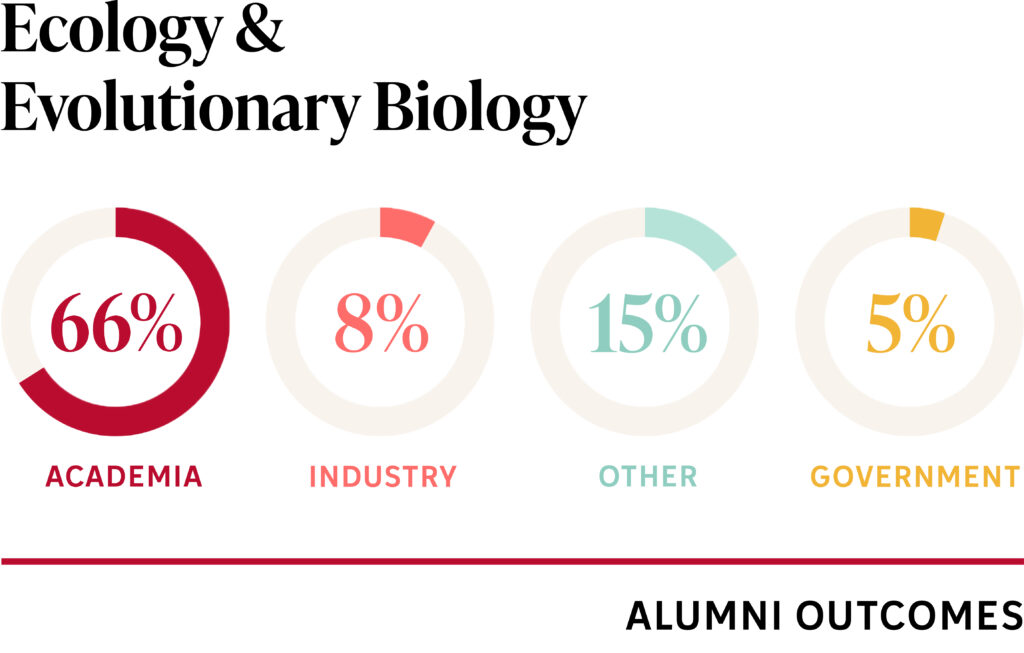
EEB graduates pursue a variety of careers. Most program graduates go into academia, but many find paths in government, industry, and other fields, like environmental law, conservation, or science communication.
Faculty Co-Directors:
Graduate Program Administrator: