The Biochemistry, Biophysics & Structural Biology (BBSB) Program brings together scientists who aim to understand biological systems ranging from single molecules to whole organisms at the level of chemical transformations and molecular interactions. Our students investigate diverse topics including protein dynamics, the molecular mechanisms of nucleic acid and cytoskeletal motors, membrane-bound ion channels, metabolic enzymes, immunological signaling, and much more. Learning more about how these molecules function leads to insights into a variety of biological contexts including host-pathogen interactions, cancer, metabolic regulation, immunological signaling, DNA-repair, and muscle function to name a few. BBSB faculty on both campuses share ties with DBBS programs such as Molecular Microbiology & Microbial Pathogenesis, Immunology, and Plant & Microbial Biosciences.
The BBSB program encompasses three related research areas:
Biochemistry uses the concepts and approaches of chemistry to understand the molecular basis of biological processes. Biochemical studies include enzymology, metabolism, DNA replication, cell signaling, and drug discovery. Insights from these studies may shed light on fundamental biological processes as well as mechanisms of disease, new drug treatments, and new diagnostics.
Biophysics brings together elements of biology, chemistry, physics, and mathematics to describe and understand biological processes. It is a fusion of scientific cultures; the systems and processes of biochemistry and computational & molecular biology are joined with the principles and quantitative laws of physical chemistry. The goal is to develop a quantitative and predictive understanding of biology at a detailed molecular level.
Structural Biology seeks a mechanistic understanding of macromolecular function through molecular structure and dynamics. X-ray diffraction, cryo-electron microscopy, and NMR are among the tools used by structural biologists, whose insights address important questions throughout biology and medicine at Washington University.
DBBS offers a student-driven course of study that is a flexible, personalized learning pathway designed and led by the student, with oversight and guidance by faculty and staff. This model entrusts and empowers students to take ownership of their education by identifying their academic interests, setting learning goals, and curating a curriculum that aligns with their intellectual passions and career aspirations.
Prospects: Graduate Course of Study
Current DBBS students: Program Guidelines
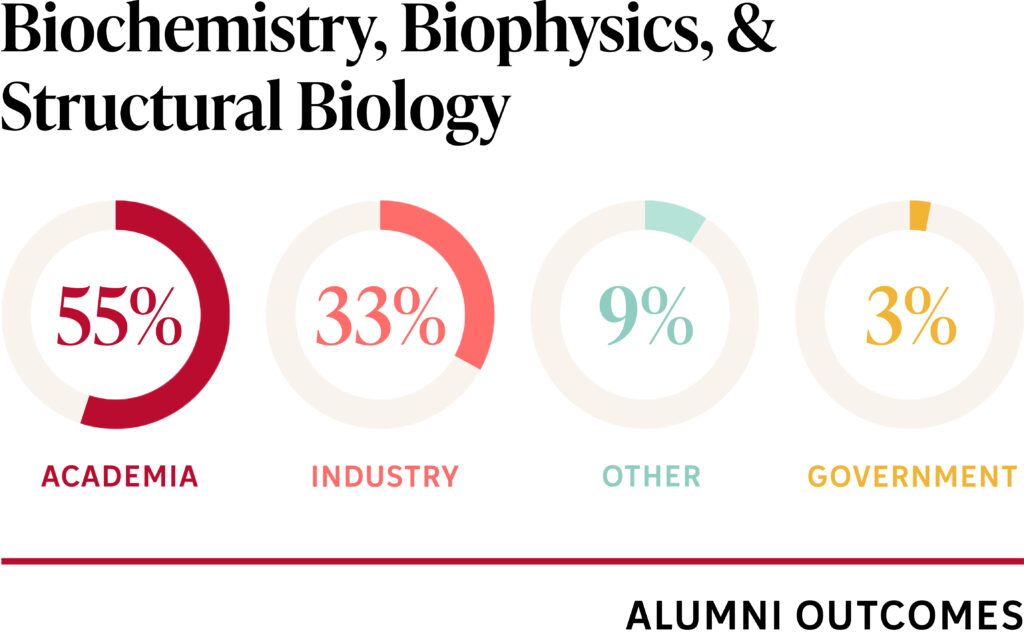
BBSB graduates pursue a variety of careers. Most program graduates go into academia, but many find paths in industry, government, and other fields, like science communication, law, and business and entrepreneurship.
Faculty Co-Directors:
Graduate Program Administrator: